10 Considerations for Rethinking Your Forklift Energy Strategy
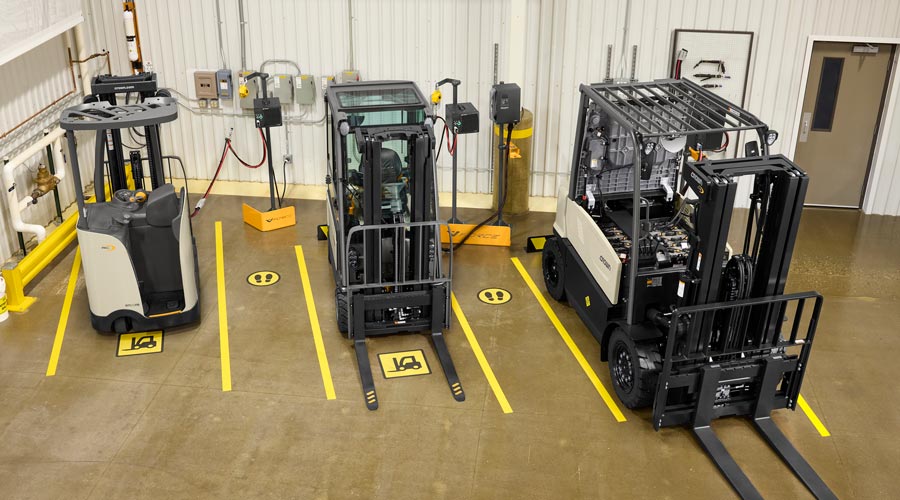
Understanding forklift power requirements is not as simple as it may seem. It begins with the assumption that a rechargeable battery powers the forklift until the battery is drained and needs to be recharged. While one battery in one forklift may seem fairly straightforward, in many warehouses you could be managing the power requirements of dozens of forklifts, and perhaps even multiple batteries per forklift.
Coordinating an efficient charging strategy requires an understanding of each forklift’s function and power requirements, including battery runtimes, age, number of charge/discharge cycles, depth of discharge and maintenance and warehouse conditions. It can quickly become quite complex.
A successful energy strategy requires a holistic, end-to-end approach that integrates forklifts, batteries, chargers and ongoing management to optimize efficiency and productivity. Here are 10 key factors for developing an end-to-end energy strategy:
1. Know your total fleet power requirements, determined by voltage rating, motor power and maximum load capacity of the forklifts in your fleet.
2. Your strategy is impacted by the warehouse’s infrastructure capabilities, the amount of utility power available for charging and the locations where charging is accessible. Lead-acid batteries may require space for a centrally-located battery room, while charging stations for lithium-ion batteries can be spread throughout the facility.
3. Understand the characteristics and differences of lead-acid and lithium-ion batteries when determining possible use.
4. Charging times and frequency can also be influenced by battery size, which can also vary based on the needs of the application. Battery size also varies due to the selected battery technology and the specifications of the forklift in which it is used.
5. The right charging method for a particular site depends on the application’s battery usage.
6. Warehouse design can also affect charging functionality and location. Your design will determine whether and where charging stations may be safely and efficiently located to minimize unnecessary travel and to support your strategy.
7. Know how your utility’s electric rates vary by time of day to develop a strategy that balances productivity with consumption and energy cost. Consider how you consume power, even down to the individual forklift.
8. Service and maintenance practices can significantly affect battery performance and lifespan. An experienced supplier can help ensure a comprehensive approach to tailoring battery and charger service to fit your energy strategy.
9. Not all forklift power providers are equal. More effective providers can provide an integrated solution, leveraging service capabilities and resources to support your power needs across your facilities, regardless of location.
10. Finally, your energy strategy should contribute to your overall sustainability goals and strategy when possible. Give your forklift power provider an opportunity to contribute by sharing your goals and strategy with them.
The need to support higher throughputs and greater efficiency is growing. Fleet managers are seeking to develop the right energy strategy to improve forklift utilization, productivity and efficiency. To learn more about developing an integrated energy strategy for your forklift fleet, read Crown’s new e-book “A Winning Power Play: Developing an Integrated Forklift Energy Solution.”
The e-book is designed to help fleet managers evaluate current practices and identify solutions tailored to fleet, site and application requirements. It examines the considerations that factor into power decisions, describes a method for gaining visibility into power usage and explains the characteristics of different battery technologies and charging strategies.