Is Your Energy Strategy Future-Ready?
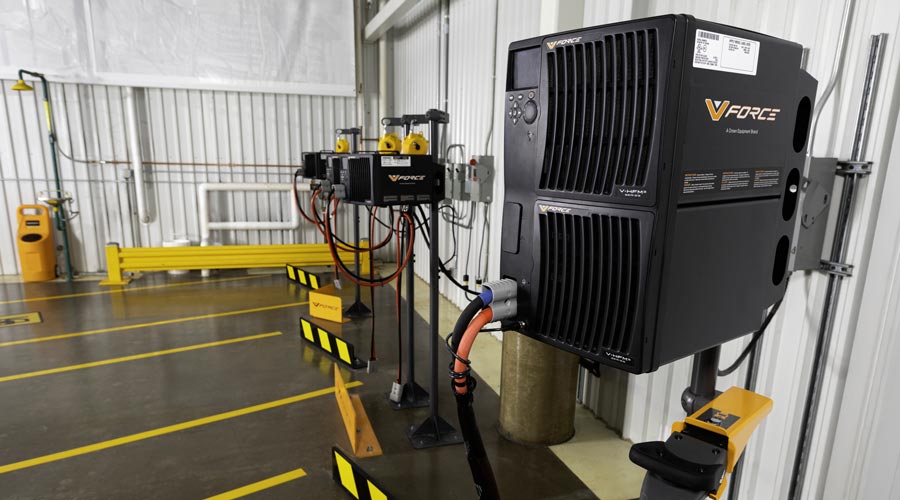
An integrated energy solution can provide a level of confidence that forklifts, batteries, chargers and accessories have been designed and tested to operate as an efficient system. However, this system must be able to evolve to avoid being left behind.
Choosing the right charging method for your application can be challenging, especially in cases where there is multi-shift usage with forklifts constantly on the move. There are three types of forklift battery charging methods from which to choose, though charging behavior may differ based on battery type.
1. Conventional charging: Ideal for single-shift operations where no mid-shift battery changing is needed. Batteries are continuously charged for eight hours after a shift, followed by an eight-hour cooldown period. This is most common in forklifts powered by lead-acid batteries.
2. Opportunity charging: Batteries are charged for short intervals at available times throughout the day, such as work breaks, scheduled lunches and shift changes. This is the most common method for lithium-ion battery-powered forklifts.
3. Fast charging: A potential solution for applications that run two shifts back-to-back or three shifts with medium-duty requirements. It combines battery monitoring technology with advanced power conversion to return energy to batteries faster than conventional or opportunity methods, reducing downtime. This is currently the least common method due to the required weekly equalization charge and higher infrastructure costs.
As you consider your charging requirements, it’s important to incorporate chargers that can be configured to support either lead-acid or lithium-ion batteries, to ensure you are better prepared as your fleet evolves.
Cable Management
Improper cable management can stress cables and connections, leading to premature wear, tear and connector failure, including failures caused by excessive heat during charging. This can also negatively affect productivity, equipment and overall maintenance cost.
Here are three tips for reducing unplanned downtime through proper cable management:
1. Choose the right charging location to allow sufficient space for positioning the forklift in a way that doesn’t stress cables and connectors
2. Use the proper accessories to elevate chargers and to secure and prevent cables and connectors from dropping to the floor
3. Train operators on proper charging and cable management
Be Open To New Technologies
Even after you’ve developed an energy strategy, it’s important to investigate and understand emerging trends and technologies that may improve your efficiency and ROI. These trends include:
- Alternative power solutions, such as lithium-ion or fuel cells
- Integrated battery monitoring enables advancements like simple battery queuing (SBQ), wherein battery chargers are connected and configured into charging pools, allowing the chargers to indicate the next available battery based on charge time or charge state
- Energy management tools, like devices that manage energy demands based on spot pricing limits, peak loads or infrastructure limits
- Renewable energy generation and on-site storage to reduce reliance on grids during peak hours
A single-source manufacturer for forklifts, batteries and chargers offers integration advantages that can help streamline the path to success for your business by integrating each product and its components at their deepest levels. Deep knowledge and experience provide a basis for identifying comprehensive, configured solutions that address challenges without the complexities associated with integrating diverse point solutions.
To learn more about developing an integrated energy strategy for your forklift fleet, read Crown’s new e-book “A Winning Power Play: Developing an Integrated Forklift Energy Solution.”
The e-book is designed to help fleet managers evaluate current practices and identify solutions tailored to fleet, site and application requirements. It examines the considerations that factor into power decisions, describes a method for gaining visibility into power usage, and explains the characteristics of different battery technologies and charging strategies.
Finally, the e-book outlines how to bring all of that together into a more cohesive, end-to-end strategy that can be further enhanced by working with suppliers who can provide an integrated forklift energy solution.