A Guide to Warehouse Racking Systems
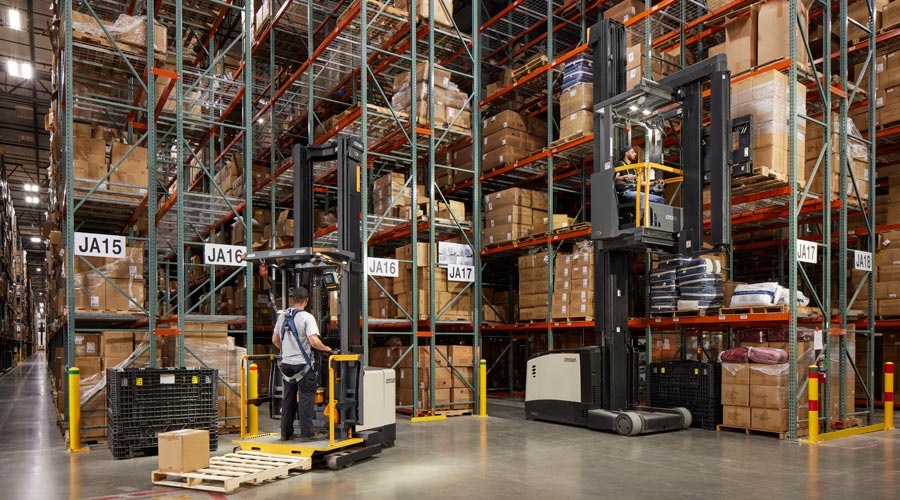
The right warehouse racking system can help you make better use of available space, increase storage capacity and improve operational efficiency. Since every facility has unique storage requirements, there are several types of warehouse racking designed to support different material handling needs.
What Is Warehouse Racking?
Warehouse racking is a storage system used to organize and store palletized or non-palletized inventory within a warehouse or distribution center. These systems help increase storage space, improve inventory control and support efficient product movement.
Common warehouse racking systems include selective rack, double-deep rack, push-back rack, flow-thru rack, pallet shuttle rack, drive-in rack, cantilever rack and pick modules.
Types of Warehouse Racking Systems
- Selective Rack: Provides direct access to every pallet location, making it one of the most widely used warehouse storage systems. It’s typically configured in back-to-back rows with each pallet accessible from an aisle.
- Double-Deep Rack: Increases storage density by storing pallets two positions deep on each level while maintaining access through deep-reach material handling equipment.
- Push-Back Rack: Increases storage density by storing pallets multiple positions deep on each level, with all loading and retrieval performed from the front of the rack. It works best in applications where inventory turns over frequently.
- Flow-Thru Rack: Rollers move pallets from the loading side to the picking side of the rack, with pallets stored multiple positions deep. Best in first-in, first-out operations.
- Pallet Shuttle Rack: This semi-automated deep-lane system uses an integrated shuttle cart to transport pallets from the lane entry to storage positions within the rack. The rack is loaded from one end, helping to reduce lift truck travel.
- Drive-In Rack: Store pallets multiple positions deep within a storage lane and utilizes a single entry/exit point (drive-in), making it suitable for last-in, first-out operations.
- Cantilever Rack: Utilizes columns and cantilever arms rather than rails, making it suitable for storing long or bulky materials.
- Pick Modules: Integrates various racking solutions into multi-level systems to improve order picking and fulfillment efficiency.
Where to Start?
Choosing the right warehouse racking system depends on several factors, including:
- Warehouse layout and available space
- Material handling equipment requirements
- Pallet dimensions and load weights
- Inventory flow requirements
- Current and future storage capacity needs
Working with an experienced warehouse solutions provider can help ensure your racking system supports productivity, operational efficiency and long-term growth.