What’s the Right Forklift Energy Strategy for Your Operation?
An effective forklift energy strategy starts with understanding how your fleet uses power. Your battery choice is only one part of the equation.
Crown’s e-book, A Winning Power Play: Developing an Integrated Forklift Energy Solution, shows you how fleet demands, charging windows, utility capacity, infrastructure and future needs work together so you can make more informed energy decisions for your operation.
What Should Guide Your Energy Strategy?
A successful forklift energy strategy is based on the requirements of the application. There’s no single approach that fits every operation.
The e-book points out key factors to consider, such as:
- Fleet power requirements, including voltage, motor power and load capacity
- Available utility power and the location of charging areas
- Battery type, size and charging characteristics
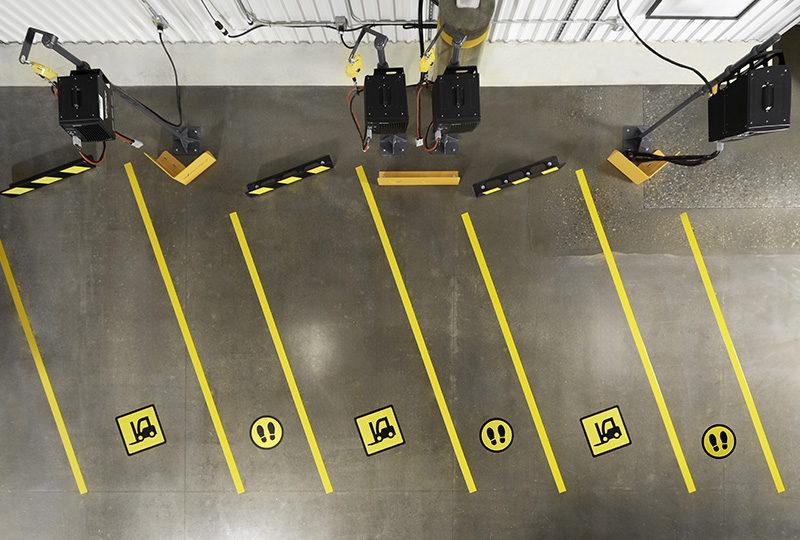
- Charging methods and charger placement
- Service, maintenance and battery management practices
- Operational and organizational sustainability goals
Looking at these factors together can help you develop an energy solution that supports existing needs while providing flexibility as your operation changes.

What Can a Power Study Reveal About Your Operation?
A power study provides data and insight to help determine how your fleet consumes and replenishes power. Crown’s V-Force Energy Solutions power study combines monitoring, data analytics and expert insight to help fleet managers:
- Understand existing power needs
- Evaluate battery and charging options
- Establish a baseline for future energy decisions

Which Battery and Charging Options Fit Your Application?
Battery technology and charging strategy should be considered together based on how forklifts are used, available charging time and site infrastructure.
- Lead-acid batteries typically have a lower initial cost, are durable and are nearly 100% recyclable. They require regular maintenance and adequate charging and cooling time, and some multi-shift applications may require additional batteries.
- Lithium-ion batteries require less routine maintenance, can be charged more quickly and support opportunity charging. They typically have a higher initial cost, and their charging requirements should be evaluated against the needs of the application and facility.
- Fuel cell technology offers fast refueling and is capable of full-shift operation but requires hydrogen supply and dedicated refueling infrastructure.
Charging options include conventional charging, typically used for lead-acid batteries where there is time for a full charge and cooling period; opportunity charging, which uses shorter charging periods during available downtime; and fast charging, which may suit certain multi-shift applications but may require greater infrastructure investment.
Charger selection should account for battery technology, charging method and future fleet needs. Chargers configurable for both lead-acid and lithium-ion batteries can provide added flexibility as fleets evolve
How Can Battery Management Help Improve Performance?
Battery management can influence equipment availability, battery life and energy performance. The e-book identifies the monitoring, maintenance, charging and operator practices that can help you get more from your energy system.
How Can You Prepare for Changing Energy Demands?
Connected technology is giving warehouse operations more ways to understand and manage energy use. The e-book covers strategies for enabling greater visibility into power utilization while managing charging activity and energy demand.
It also explains how energy and load management can help operations respond to peak demand, utility programs and infrastructure limitations. Maintaining flexibility in your energy strategy can make it easier to evaluate lithium-ion batteries, fuel cells and other technologies as operational needs evolve.
What Changes When You Have an Integrated Energy Solution?
When forklifts, batteries and chargers are designed and tested to operate together, fleet managers can evaluate the complete energy system in the context of the application rather than coordinating separate solutions.
Crown combines material handling experience with forklift, battery, charger and energy-management capabilities to help customers develop solutions suited to their operational requirements.
Download the e-Book
Battery technology, charging strategy, infrastructure and fleet requirements all shape your forklift energy solution. Download the guide to see how these factors interact and what to evaluate before choosing or changing your approach.
Have Questions About Your Forklift Energy Strategy?
Crown power specialists can help you evaluate your fleet requirements, power usage, battery options and charging needs.
Frequently Asked Questions
How can a power study help determine my forklift power needs?
A power study uses monitoring and data analysis to show how your fleet consumes and replenishes power. The e-book explains how this process can help you evaluate existing power needs, identify charging requirements and determine whether changes to battery technology, charger quantity, charger location or charging schedules may benefit the operation.
How do I choose between lead-acid and lithium-ion forklift batteries?
The right choice depends on how your forklifts are used, available charging time, maintenance requirements and facility infrastructure. Lead-acid batteries typically have a lower initial cost, while lithium-ion batteries can be charged more quickly and support opportunity charging.
Which forklift battery charging method is right for my operation?
The right charging method depends on battery type, operating schedule, available charging time and infrastructure. Conventional charging allows for a full charge and cooling period for lead-acid batteries. Opportunity charging uses shorter periods of available downtime and fast charging may suit certain multi-shift applications.
Have More Questions about Power?
Connect with our power experts to explore a range of energy solutions optimized for your application.
See Energy Solutions at Work